
How to clean gutters safely (and how often you really need to)
Short answer
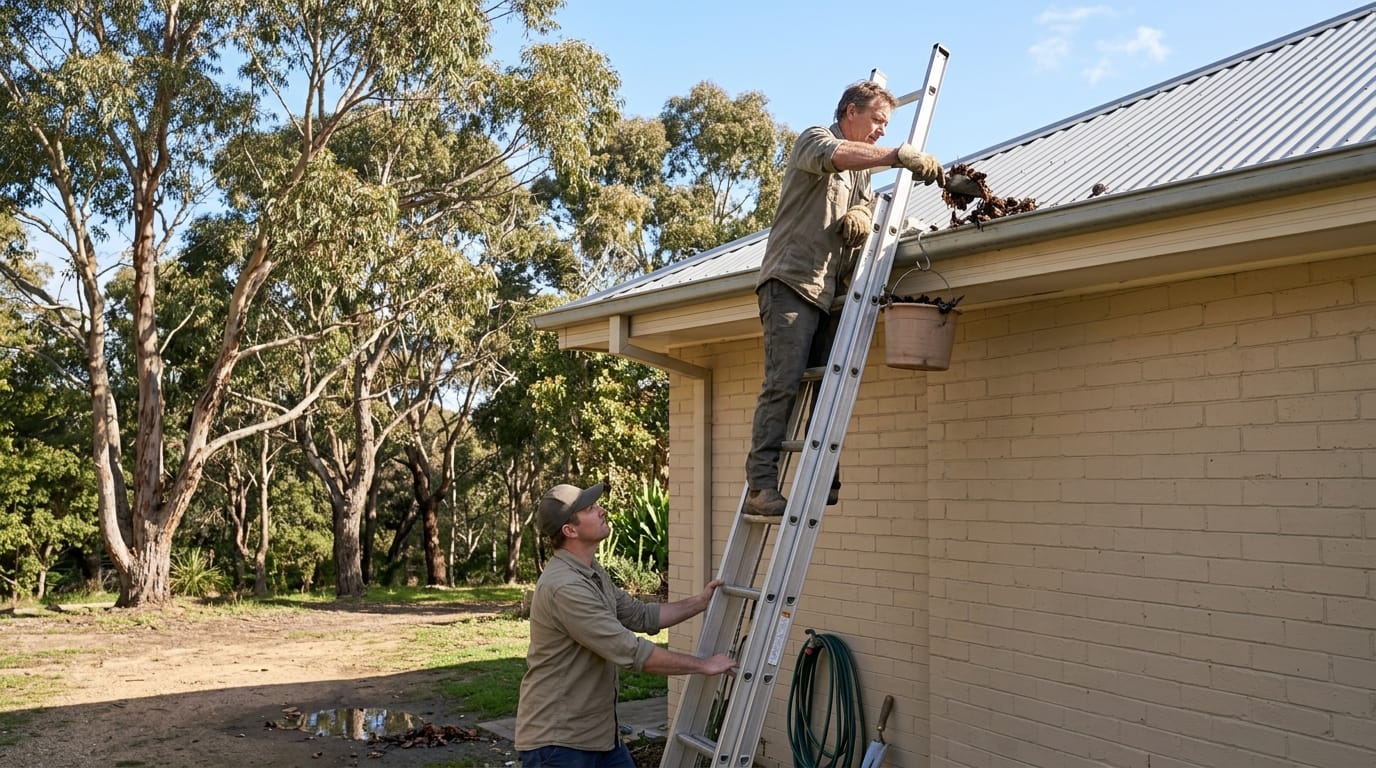
Clean gutters at least twice a year, in late autumn after leaf fall and in early spring before storm and bushfire season, and more often if trees overhang the roof. Work from a stable ladder on flat ground with someone holding it or with the ladder secured, keep three points of contact, never lean out, and move the ladder rather than reaching. Scoop debris into a bucket, flush the gutters and downpipes with a hose, and check for rust, sagging and leaks. If you'd have to walk on the roof, pay a professional.
Blocked gutters are how a lot of expensive water damage starts: water spills over the back of the gutter into the eaves and wall cavities, downpipes overflow against the foundations, and in bushfire country, dry leaves in the gutter are fuel waiting for an ember. Cleaning them is a DIY job, but it’s done off a ladder, so doing it safely is most of the skill.
How often should you clean your gutters?
| Your home | How often |
|---|---|
| Few trees nearby | Twice a year: late autumn and early spring |
| Trees overhanging the roof | Every 3 months, or after big winds and storms |
| Bushfire-prone area | Early spring before the Fire Danger Period, then regularly through fire season. The NSW RFS says this can mean every week, two weeks or month, depending on the property |
The NSW Rural Fire Service calls removing leaves from roofs, valleys and gutters before bushfire season critical: most homes lost in bushfires are lost to ember attack, and gutter debris is where embers catch.
Ladder safety first
SafeWork NSW’s ladder rules apply just as much at home:
- Set up on flat, stable ground. If you can’t, use leg levellers or a stabiliser.
- Secure the ladder at the top, bottom or both, or have someone hold it.
- Keep three points of contact: two hands and a foot, or two feet and a hand.
- Never lean or reach out from the ladder. Climb down and move it.
- Only carry small items. Hang a bucket from the ladder with an S-hook instead of carrying it.
Also: stay well clear of overhead power lines, don’t work in wind or rain, wear gloves (gutters hide sharp metal and screws), and don’t work alone. If the job means walking on the roof, pay a professional with the right fall protection.
Step by step
You need: a suitable ladder (with a stabiliser if possible), work gloves, safety glasses, a gutter scoop or small trowel, a bucket and S-hook, a garden hose with a trigger nozzle, and a tarp for the garden bed below.
- Lay a tarp under the section you’re working on.
- Start near a downpipe and work away from it, scooping debris into the bucket.
- Move the ladder often. Only clear what you can reach comfortably from the ladder.
- Flush the gutter with the hose, working towards the downpipe, and watch that water flows freely.
- Check the downpipes. If water backs up, flush from the top, or from the bottom outlet if it’s accessible. A stubborn downpipe blockage below ground may be a stormwater drain problem for a plumber.
- Inspect while you’re up there: rust holes, leaking joints, sagging sections that hold water, and loose brackets.
Older homes: check before you scrape
Some older Australian homes have asbestos cement (fibro) roofs, gutters or eaves. Don’t scrape, water-blast or drill anything that might be asbestos cement. If you’re unsure what your gutters or roof are made of, get them tested first.
Gutter guards: worth it?
Gutter guards (mesh over the gutters) cut down how often you need to clean and keep large leaves out, but they don’t remove the job entirely. Fine debris and seed pods still get through, and the guards themselves need clearing. In bushfire-prone areas, the NSW RFS recommends metal gutter guards.
Rainwater tanks
If your gutters feed a tank, clean the gutters before rain is forecast, not after, and check the tank’s inlet screen and first-flush device at the same time. See the home maintenance checklist for tank maintenance intervals.
DIY or pay a pro?
Gutter cleaning is DIY-legal everywhere, and there’s no licence involved. The question is safety:
- Single-storey, flat ground, good ladder, a helper: a reasonable DIY job.
- Two storeys, steep or slippery ground, or you’d need to get on the roof: pay a professional.
- Repairs: patching a small leak with gutter sealant is DIY. Replacing gutters or fascia is usually a job for a roofer. Anything connected to stormwater drains below ground is licensed plumbing.
Frequently asked questions
How often should gutters be cleaned in Australia? At least twice a year, and more often if trees overhang your roof or you’re in a bushfire-prone area.
What happens if you don’t clean your gutters? Water can overflow into the eaves, walls and ceiling, rot the fascia boards, pool against the foundations, and breed mosquitoes. In bushfire areas, dry leaves in gutters are a major ember risk.
Can I clean gutters from the ground? Partly. Telescopic gutter-cleaning attachments for a hose or leaf blower can clear light debris from single-storey homes. They won’t shift packed, wet leaves.
Is it safe to walk on my roof to clean gutters? Falls from roofs cause serious and sometimes fatal injuries. If you can’t do it from a properly set-up ladder, pay a professional.
Sources
Every rule on this page is taken from these official sources. If a rule has changed, please tell us and we’ll fix it.
This guide is general information, not legal or professional advice. Rules differ between states, councils and individual properties, and they change. Confirm with your state regulator or council before starting work, and if in doubt, get a licensed tradesperson.