
How to get rid of mould in the bathroom (and stop it coming back)
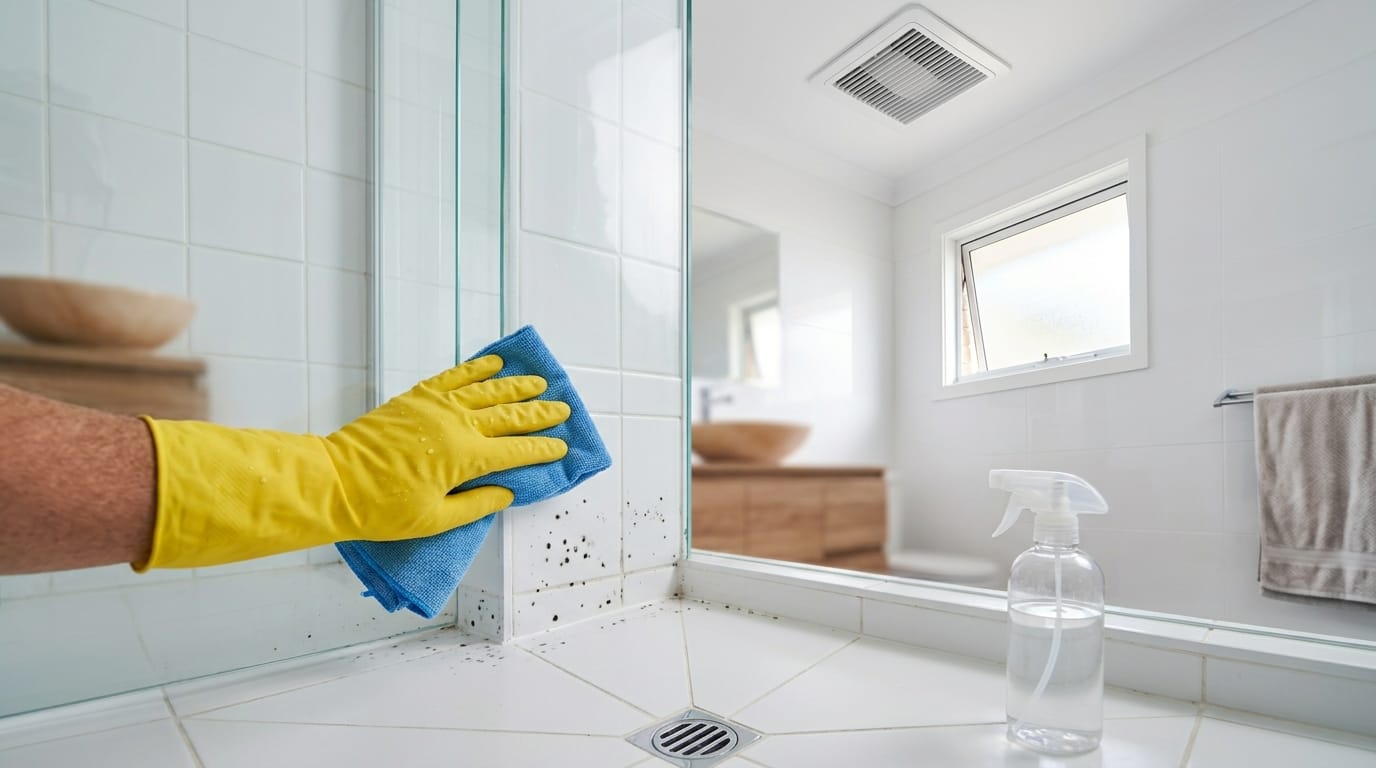
Short answer
For most bathroom mould, NSW Health recommends mild detergent or white vinegar diluted in water (4 parts vinegar to 1 part water); for stubborn mould, a diluted bleach solution (250 mL of bleach in 4 litres of water). Wear gloves, eye protection and a P1 or P2 mask, ventilate the room, never dry-brush mould, and never mix bleach with vinegar or other cleaners. Mould that keeps coming back means a moisture problem: run the exhaust fan during and after every shower, fix leaks, and replace silicone that mould has grown into.
Black spots on the ceiling, grey creeping along the grout, pink-black stains in the silicone: bathroom mould is one of the most-searched home problems in Australia, especially through humid summers and damp winters. The good news is that most of it is a cleaning job. The catch is that it always comes back unless you fix the moisture that caused it.
Before you start: protect yourself
Mould releases spores when it’s disturbed. Health authorities recommend:
- Rubber gloves, eye protection, and a P1 or P2 mask. People with heart or lung conditions should check with a doctor before wearing a P2 mask.
- Ventilation: open the window and door, and run the exhaust fan.
- No dry brushing. A dry brush flicks spores into the air you’re breathing. Always clean damp.
- Never mix bleach with vinegar, ammonia or other cleaners. It can release toxic chlorine gas.
People with asthma, allergies, breathing conditions or weakened immune systems are more sensitive to mould. If that’s you, get someone else to do the clean-up.
Step by step: removing bathroom mould
1. Start with detergent or vinegar
For most surface mould on tiles, grout, glass and painted ceilings, mild detergent in water, or white vinegar diluted 4 parts vinegar to 1 part water, is enough (NSW Health). Spray or wipe it on, give it a few minutes to work, then wipe it off with a damp microfibre cloth. Rinse the cloth often, or use several.
2. Stubborn mould: diluted bleach
If it doesn’t come off, NSW Health suggests a diluted bleach solution: 250 mL of bleach in 4 litres of water. Wear gloves and eye protection, keep the room well ventilated, and test on a small area first (bleach can discolour coloured grout). Don’t use bleach and vinegar together, or one straight after the other without rinsing.
3. Dry everything
Mould grows back on anything that stays damp. After cleaning, dry the surfaces with a clean towel, leave the fan running and the window open for an hour.
4. Deal with the silicone
If mould is inside the silicone (black or pink spots that don’t wipe off), cleaning won’t fix it; the mould has grown into the sealant. Replace it: cut out the old silicone with a sharp blade, clean and dry the joint completely, and run a new bead of mould-resistant bathroom silicone. Let it cure fully (usually 24 hours) before showering.
5. Ceilings and painted walls
Wipe (don’t scrub) with the detergent or vinegar solution, dry, and once it’s fully dry, repaint with a primer and a bathroom paint that contains a mould inhibitor. Painting over live mould without cleaning it first just hides it for a few weeks.
Why it keeps coming back (and how to stop it)
Mould only grows where it’s damp and poorly ventilated, so the long-term fix is moisture:
- Run the exhaust fan every shower, and for 15–20 minutes afterwards. NSW Health recommends exhaust fans when bathing and showering. If your fan doesn’t clear the mirror, it may be too small, blocked, or venting into the ceiling instead of outside.
- Open a window when you can, even a little.
- Squeegee the shower walls and glass after each use.
- Fix leaks. Dripping taps, leaking shower roses and cracked grout all feed mould. So does a blocked gutter or leaking roof above the bathroom ceiling.
- Keep it warm and dry. Cold ceilings attract condensation. Wash and fully dry bath mats and towels regularly.
Want a better exhaust fan? Installing, replacing or moving a hardwired exhaust fan is licensed electrical work in every Australian state, so that step needs an electrician. Cleaning the fan’s grille and checking it runs is DIY.
When it’s more than a clean-up
Call a professional if:
- The mould covers a large area, or keeps returning within weeks of cleaning. Better Health Channel recommends a mould remediation professional for large areas of regrowth.
- There’s a smell of damp or soft, stained plasterboard, which can mean water is getting into the wall or ceiling.
- The tiles are drummy, grout keeps cracking, or the room next door has damp skirting. That can mean the shower’s waterproofing has failed. Read can I waterproof my own bathroom? before you decide who fixes it.
- Mouldy plasterboard is crumbling. Cut it out and replace it (see how to patch plasterboard), and use wet-area board in a bathroom.
Keep it gone: a simple routine
| How often | Job |
|---|---|
| Every shower | Exhaust fan on; squeegee glass and walls |
| Weekly | Wipe shower and grout with detergent; wash bath mats |
| Every 3 months | Clean the exhaust fan grille; check silicone for spots |
| Every 6 months | Check silicone and grout in all wet areas (part of the home maintenance checklist) |
In Jib, you can add these as repeating jobs so the reminders come to you.
Frequently asked questions
Is vinegar or bleach better for mould? Health authorities suggest starting with detergent or diluted white vinegar, and using diluted bleach for stubborn mould. Never mix them.
Is bathroom mould dangerous? For most healthy people it causes irritation, like a runny or blocked nose, itchy eyes or skin, and sometimes wheezing. People with asthma, allergies or weakened immune systems are more at risk. See a doctor if you’re worried.
Why is there mould on my bathroom ceiling? Steam condenses on the cooler ceiling and stays damp. It’s usually a ventilation problem: the fan isn’t used, isn’t strong enough, or doesn’t vent outside.
Can I paint over mould? Not without cleaning it first. Clean, dry, prime, then use a paint with a mould inhibitor.
Is it a renter’s or landlord’s problem? Cleaning everyday mould is usually the tenant’s job; mould from leaks, poor ventilation or building defects is usually the landlord’s. Check your state’s tenancy authority.
Sources
Every rule on this page is taken from these official sources. If a rule has changed, please tell us and we’ll fix it.
This guide is general information, not legal or professional advice. Rules differ between states, councils and individual properties, and they change. Confirm with your state regulator or council before starting work, and if in doubt, get a licensed tradesperson.