
Can I waterproof my own bathroom? The rules in NSW, QLD and VIC
Short answer
Usually yes, on your own home. Waterproofing isn't on the licence-at-any-value list the way electrical, plumbing and gas work are. But the work must still meet the National Construction Code and AS 3740, and bigger renovations bring in owner-builder rules: over $10,000 in NSW (when the work needs a DA or CDC), over $11,000 in Queensland and over $20,000 in Victoria. Anything touching the drain or pipes needs a licensed plumber. Because failed waterproofing is so expensive to fix, many people do the demolition and tiling themselves and pay a licensed waterproofer for the membrane and certificate.
Search this question and most of the answers come from waterproofing companies telling you it’s illegal to do it yourself. For a homeowner working on their own home, that usually isn’t true. What is true is that waterproofing is the part of a bathroom where a small mistake costs the most.
Why waterproofing is different from plumbing and electrical
In every Australian state, some trades need a licence at any value, even for a ten-minute job on your own home: fixed electrical wiring, gasfitting and most plumbing and drainage. NSW calls these “specialist work”, and Queensland lists them as work needing a licence “of any value”.
Waterproofing isn’t on those lists. It’s regulated like general building work: licences are about doing work for other people above a dollar value, and the quality rules (the building code) apply to everyone, including you.
The rules by state
New South Wales
- A contractor licence is needed to do or contract waterproofing work for someone else worth more than $5,000 (labour and materials, including GST).
- On your own home, you need an owner-builder permit if the work is worth more than $10,000 and needs development consent or a complying development certificate. Most like-for-like bathroom renovations don’t need either, but moving walls or plumbing might. Check with your council.
- An owner-builder permit doesn’t let you do plumbing, electrical or gas work. Those still need licensed trades.
Queensland
- Waterproofing isn’t one of the trades Queensland requires a licence for at any value.
- You don’t need a licence as an owner doing work on your own property worth no more than $11,000. Above that, you need an owner-builder permit.
- For licensed contractors, a waterproofing certificate is part of the paperwork on larger jobs. The QBCC takes wet areas seriously: bathroom claims under the Queensland Home Warranty Scheme in 2024–25 averaged almost $25,000 to fix.
Victoria
- Domestic building work on your own home worth more than $20,000 needs you to be a registered owner-builder with a certificate of consent from the Building and Plumbing Commission. Below that, you can do the work yourself.
- Plumbing, including the shower waste and any pipework, must be done by a licensed plumber.
Other states and territories
The same pattern broadly applies in WA, SA, Tasmania and the ACT: plumbing, drainage and electrical work need a licence, while general building work on your own home has owner-builder value limits. Check your state building regulator before you start.
What the code requires (whoever does it)
The National Construction Code sets the standard, with AS 3740 as the detailed “how”:
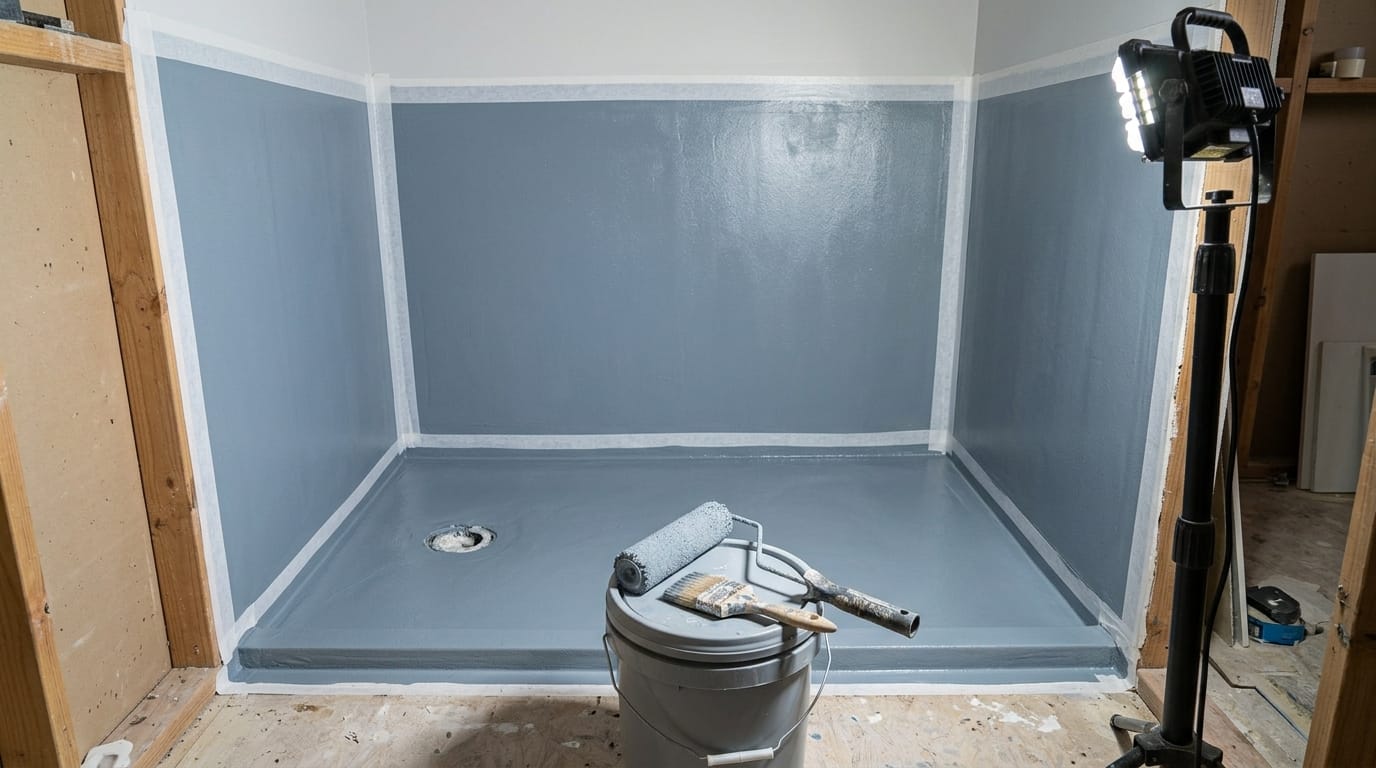
- The shower must be waterproof: the floor and the walls up to at least 1800 mm.
- Outside the shower, a concrete or fibre-cement floor must be at least water resistant. A timber-based floor (particleboard, plywood) must be waterproof.
- Wall–floor junctions, penetrations (taps, shower roses) and the floor waste all need the right bond breakers, flanges and detailing.
In practice, most waterproofers membrane the whole bathroom floor with an upturn at the walls. Our bathroom floor calculator works out how much membrane and primer that takes.
Legal isn’t the same as sensible
Being allowed to do it doesn’t mean it’s a good idea for every job:
- Failures are hidden and expensive. A leaking membrane usually shows up months later as rotting floor framing, swollen skirting or damp in the next room, and fixing it means ripping out the tiles.
- Insurers and buyers ask for paperwork. A waterproofing certificate from a licensed installer is often wanted when you claim on insurance or sell. You can’t issue one for your own DIY membrane.
- Strata rules may apply. Apartment bathrooms often need owners corporation approval and a licensed waterproofer, whatever the state law says.
- Products are unforgiving. Wrong primer, one coat too thin, or tiling before it’s cured, and the system fails. Follow the manufacturer’s data sheet exactly.
The split most homeowners use
| Step | Usually DIY? |
|---|---|
| Strip out old tiles, vanity and fittings (with water isolated by a plumber if pipes are opened) | Yes |
| Relocate or connect any pipes, the shower waste or the floor waste | No. Licensed plumber |
| Move or add power points, lights or the exhaust fan | No. Licensed electrician |
| Screed the floor to fall | Possible, but hard to get right |
| Waterproofing membrane | Legal on your own home within the limits above; many pay a licensed waterproofer for the certificate |
| Tiling, grouting, silicone | Yes |
| Vanity, mirror, accessories | Yes (connections by a plumber) |
See the full sequence in our bathroom renovation order of trades.
Frequently asked questions
Do I need a waterproofing certificate if I do it myself? Not by law for a homeowner job under the owner-builder limits, but you won’t have one, and that can matter at sale or insurance time. A licensed waterproofer can’t certify work they didn’t do.
Is it illegal to waterproof my own shower in NSW? Not for a homeowner working on their own home under the owner-builder threshold. The $5,000 licence rule applies to people doing waterproofing work for others.
Can I just re-silicone or regrout my shower? Yes. Regrouting and replacing silicone is maintenance, not waterproofing work, and it’s fine to DIY everywhere. If water is already getting behind the tiles, though, the membrane may have failed and fresh grout won’t fix it.
Sources
Every rule on this page is taken from these official sources. If a rule has changed, please tell us and we’ll fix it.
This guide is general information, not legal or professional advice. Rules differ between states, councils and individual properties, and they change. Confirm with your state regulator or council before starting work, and if in doubt, get a licensed tradesperson.