
Bathroom renovation order of trades, and which steps you can DIY
Short answer
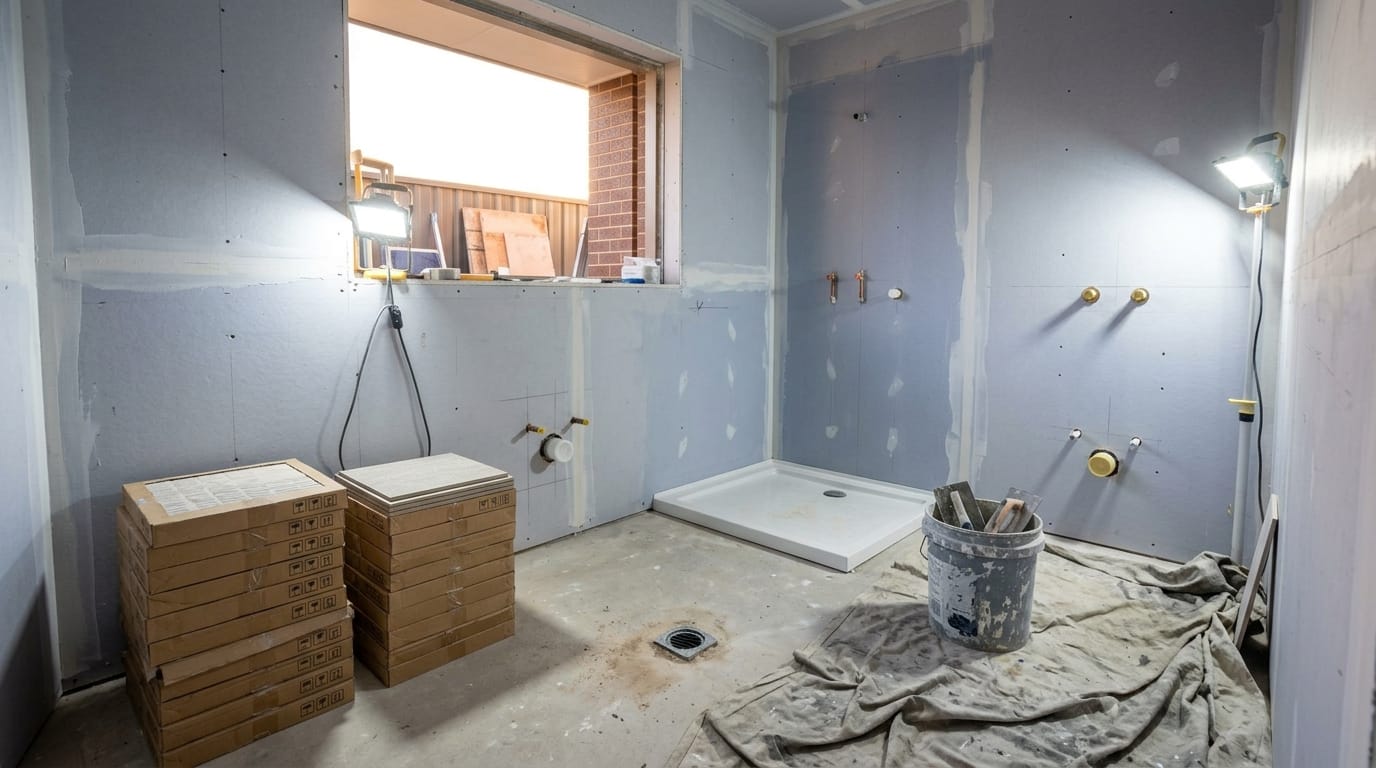
The usual order is: plan and approvals, strip-out, plumbing and electrical rough-in, wall sheeting, screed, waterproofing, tiling, then plumbing and electrical fit-off, and finally the screen, vanity and accessories. Plumbing, drainage and electrical work need licensed trades in every Australian state. Strip-out, tiling, painting and fitting accessories are usually DIY-friendly, and waterproofing depends on your state and the job's value.
A bathroom renovation is a relay race. Each trade needs the one before it to be finished, and the most expensive mistakes come from doing things out of order, like tiling before the plumber has moved the waste. Here’s the sequence, with who can do each stage.
The order, step by step
| # | Stage | Who | Typical time |
|---|---|---|---|
| 1 | Plan, measure, choose fixtures, check approvals | You | 1–4 weeks |
| 2 | Isolate water and power; strip out tiles, vanity, toilet, shower | You for strip-out; plumber to cap pipes, electrician to make power safe | 1–2 days |
| 3 | Plumbing rough-in: move or add pipes, wastes and the floor waste | Licensed plumber | 1 day |
| 4 | Electrical rough-in: lights, exhaust fan, power points, heated floor | Licensed electrician | ½–1 day |
| 5 | Framing repairs and wall sheeting (wet-area board) | You (with care) or a carpenter | 1–2 days |
| 6 | Screed the floor to fall to the waste | You if experienced, or tiler | 1 day + curing |
| 7 | Waterproofing membrane | Depends on state and value | 1–2 days incl. curing |
| 8 | Wall and floor tiling, grout, silicone | You or tiler | 2–5 days |
| 9 | Plumbing fit-off: toilet, basin, taps, shower rose | Licensed plumber | ½–1 day |
| 10 | Electrical fit-off: switches, lights, fan | Licensed electrician | ½ day |
| 11 | Shower screen, vanity top, mirror, accessories, paint | You (screen often by the supplier) | 1–2 days |
Stage notes
1. Plan and approvals
Most like-for-like bathroom renovations don’t need council approval. Moving walls, changing structure or bigger budgets can bring in owner-builder rules: work over $10,000 needing a DA or CDC in NSW, over $11,000 in Queensland, and over $20,000 in Victoria. In a strata building, you’ll almost always need owners corporation approval, particularly for waterproofing and plumbing.
2. Strip-out
Taking out old tiles, the vanity and the shower is heavy but DIY-legal. Have a plumber isolate and cap the water, and don’t touch wiring. Check for asbestos first: homes built before 1990 often have asbestos-containing wall sheeting or tile underlay in wet areas. Get it tested before you break anything.
3–4. Rough-in
This is where pipes, wastes and cables go into the walls and floor, before anything is covered up. It’s licensed work in every state. Book the plumber and electrician for the same week and give them your final fixture choices, because tap and basin positions are set here.
5–6. Sheeting and screed
Wet-area board goes on the walls, and the floor is screeded so water runs to the waste. Getting the fall right is fiddly; if you’re unsure, this is a good step to pay a tiler for.
7. Waterproofing
The shower must be waterproof (floor and walls to 1800 mm), and the rest of the floor at least water resistant, or waterproof on a timber floor. Whether you can do it yourself depends on your state: see can I waterproof my own bathroom? Whoever does it, let it fully cure before tiling.
8. Tiling
Walls first, then the floor, so you’re not standing on fresh floor tiles. Silicone, not grout, goes in the internal corners and where walls meet the floor. Our bathroom tiling materials list and floor calculator cover quantities.
9–10. Fit-off
The plumber connects the toilet, basin and tapware, and the electrician fits the switches, lights and fan. Ask each for their compliance certificate. You’ll want those when you sell or claim on insurance.
11. Finishing
Shower screens are usually installed after the tiles and silicone have cured. Paint, mirror, towel rails and accessories are all DIY.
Saving money without cutting corners
- Batch the licensed trades. Two short visits (rough-in and fit-off) cost far less than several call-outs.
- Do the strip-out, tiling and finishing yourself. These are the labour-heavy stages that are legal for homeowners everywhere.
- Buy all the tiles at once, plus 10–15%. A second batch rarely matches.
- Don’t skimp on waterproofing. It’s the one stage where a mistake means pulling the whole room apart.
Frequently asked questions
How long does a bathroom renovation take? Commonly 2–4 weeks with trades booked back to back, and longer for DIY weekends. Membrane and adhesive curing times set the minimum.
Can I install the toilet or vanity myself? You can position the vanity and fix it to the wall, but connecting it, the toilet and the taps to the water supply and drains is licensed plumbing. See can I replace a toilet myself?
Do I need an electrician for a new exhaust fan? Yes. Installing or moving a hardwired fan is licensed electrical work in every state.
Sources
Every rule on this page is taken from these official sources. If a rule has changed, please tell us and we’ll fix it.
This guide is general information, not legal or professional advice. Rules differ between states, councils and individual properties, and they change. Confirm with your state regulator or council before starting work, and if in doubt, get a licensed tradesperson.