
How to clean a split system air conditioner (and how often to service it)
Short answer
Turn the unit off at the wall or isolator, lift the front panel, slide out the mesh filters, vacuum or shake off the dust, wash them in warm soapy water, let them dry completely in the shade and refit. Do it every few weeks while you're using the aircon a lot (fortnightly in hot, humid summers), and at least a couple of times a year. A professional service every 1 to 2 years is commonly recommended. Anything involving the refrigerant, like installing, moving or regassing, legally needs an ARC-licensed technician.
A dusty filter makes your split system work harder, cool less and cost more to run, and heating and cooling are the biggest energy users in most Australian homes. Cleaning the filters is a 10-minute job most people never do. Here’s how, and where DIY stops.
How to clean the filters
You’ll need: a vacuum or soft brush, a tub or sink with warm soapy water, and a towel.
- Turn it off properly. Switch off with the remote, then at the isolator switch outside or the circuit breaker.
- Open the front panel. On most wall units it lifts up from the bottom edge and clicks open.
- Slide out the mesh filters. They usually pull down and out. Note which way they go back in.
- Remove the loose dust by vacuuming or shaking them outside.
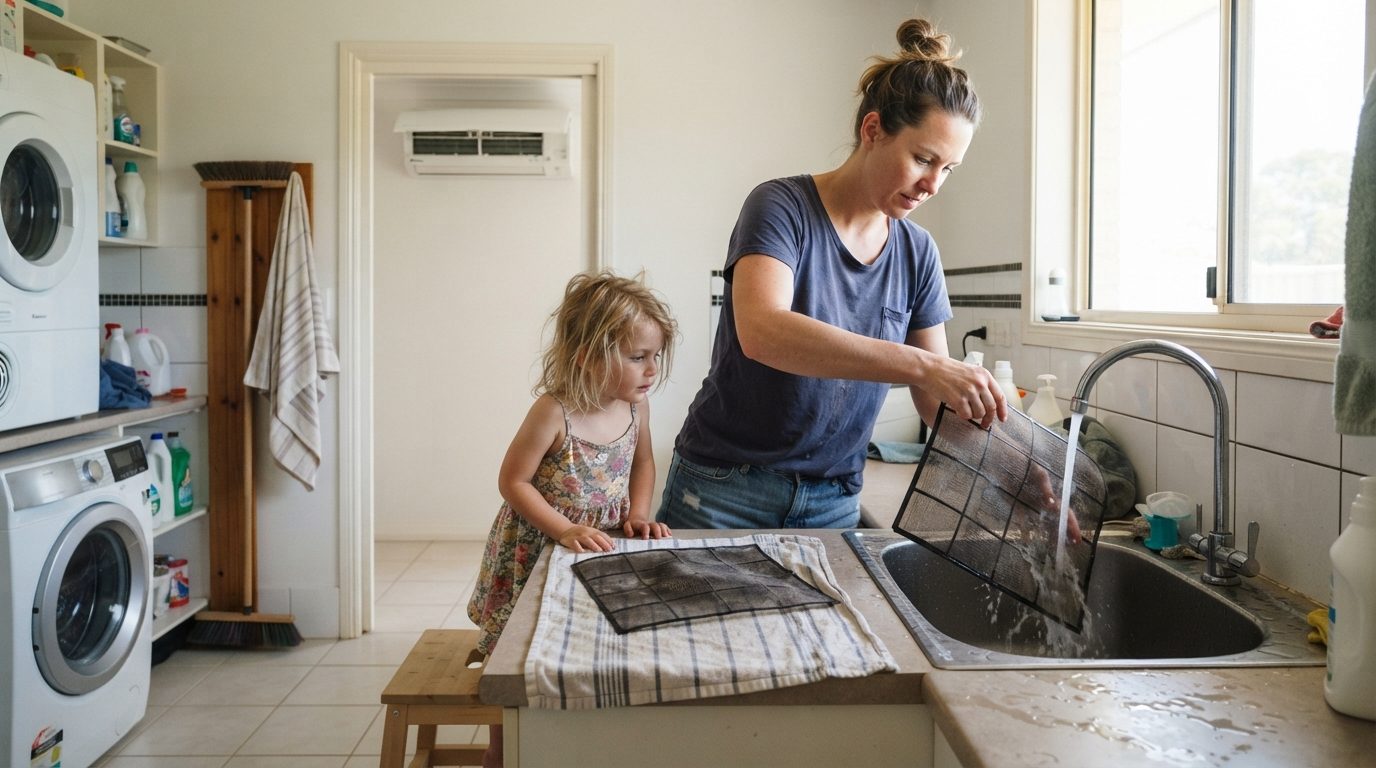
- Wash them in warm soapy water with a soft brush if they’re grimy. Avoid harsh cleaners.
- Dry them completely in the shade. Never refit damp filters or dry them in hot sun, which can warp them.
- Wipe the louvres and vents with a damp cloth, refit the filters, close the panel and switch back on.
Outdoor unit
- Keep leaves, weeds and garden clutter clear so air flows freely around it.
- Gently brush debris off the fins. Don’t pressure-wash them or bend them.
- Don’t open the casing: there’s high voltage and refrigerant inside.
How often?
| Task | How often |
|---|---|
| Clean the filters | Every few weeks during heavy use (fortnightly in hot, humid summers); at least a couple of times a year |
| Clear around the outdoor unit | Each season, and after storms |
| Professional service | Every 1 to 2 years is commonly recommended, more often if it runs daily |
Clean the filters more often if the unit runs all day, you live somewhere dusty, or you have pets.
When to call a professional
- A musty smell that’s still there after cleaning the filters (mould deeper inside the unit)
- Water dripping from the indoor unit
- Ice on the pipes, or it’s not cooling like it used to
- New rattles, grinding or buzzing
A professional service cleans the coils, fan and drain, and checks the electrics and refrigerant.
What you legally can’t DIY
In Australia, anything that involves the refrigerant needs a refrigerant handling licence from the Australian Refrigeration Council (ARC). That includes installing, moving, regassing or decommissioning a split system, even a pre-charged “DIY” kit. The electrical connection also needs a licensed electrician. Cleaning filters, louvres and around the outdoor unit is fine to do yourself.
Frequently asked questions
How often should a split system be serviced in Australia? Most manufacturers recommend a professional service every year or two. Cleaning the filters yourself in between makes the biggest difference.
Can I clean the inside of my split system myself? Filters, louvres and the front panel, yes. The coil and fan inside are best left to a technician, who uses the right cleaners and protects the electronics.
Can I install a split system myself? No. Installing one involves handling refrigerant, which needs an ARC licence, and the wiring needs a licensed electrician.
Why does my aircon smell musty? Usually dirty filters or mould inside the unit. Clean the filters first. If the smell stays, book a professional clean.
Sources
Every rule on this page is taken from these official sources. If a rule has changed, please tell us and we’ll fix it.
This guide is general information, not legal or professional advice. Rules differ between states, councils and individual properties, and they change. Confirm with your state regulator or council before starting work, and if in doubt, get a licensed tradesperson.